Sleep and sugar cravings: the cortisol link
One short night is enough to make your cells more insulin resistant the next day. Here is how poor sleep rewires your appetite, and what you can do about it tonight.
If you have ever noticed that a bad night of sleep turns into a day of snacking, you are not imagining it. Sleep and blood sugar are tightly linked, and the connection runs through a hormone you have probably heard of: cortisol.
What one short night does
Research from several universities has shown that even a single night of four to five hours of sleep measurably reduces insulin sensitivity the next day. In practical terms, the same breakfast produces a higher and longer glucose spike after a bad night than after a good one.
At the same time, sleep loss raises cortisol and ghrelin (the hunger hormone) and lowers leptin (the fullness hormone). Your body is quite literally asking for quick energy — and quick energy means sugar.
You are not weak after a bad night. Your hormones are pushing you towards sugar, and knowing that is half the battle.
The vicious cycle
- You sleep badly.
- Cortisol is higher, insulin sensitivity is lower.
- You crave sweets and refined carbs.
- Spikes and crashes make you tired and wired.
- Caffeine and late snacks disrupt the next night.
Five fixes that work
Eat protein first thing
A savoury, protein-rich breakfast after a short night blunts the exaggerated spike and reduces cravings later in the day.
Get daylight within an hour of waking
Morning light anchors your circadian rhythm, which improves both the next night's sleep and your daytime glucose handling.
Move, even a little
Ten minutes of walking after meals compensates for some of the lost insulin sensitivity.
Cut caffeine after 2 p.m.
Caffeine has a half-life of around six hours. That afternoon espresso is still in your system at bedtime.
Finish eating three hours before bed
Late meals raise overnight glucose and body temperature, both of which fragment sleep.
Track the pattern, not just the meals
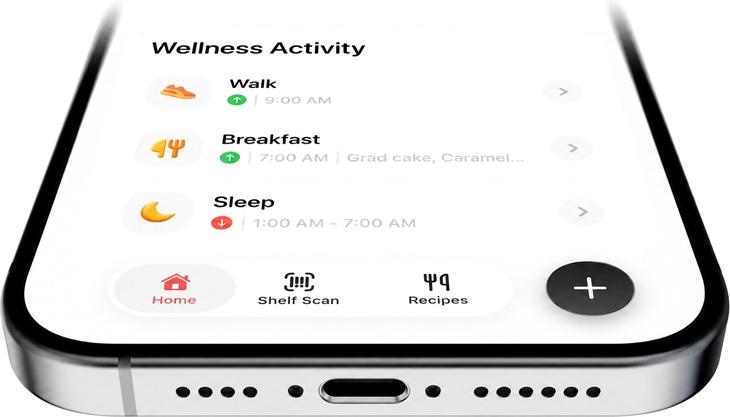
This is why Sugar.no looks at sleep and movement alongside food. Your Wellness Score reflects how the three work together on a given day, so a poor night shows up as advice — “go easy on refined carbs today, walk after lunch” — rather than as a vague feeling that you are off.
Sugar.no team
Reviewed by specialists in metabolism and nutrition.